The Scene of the Crime by Steve Braunias
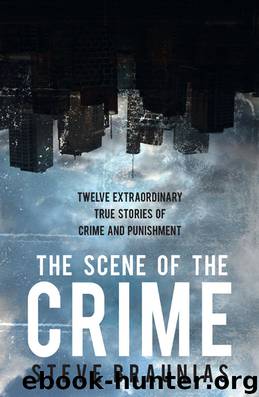
Author:Steve Braunias
Language: eng
Format: epub
Publisher: HarperCollins Publishers
Published: 2015-10-10T04:00:00+00:00
5
Harris and Assange, the two white-haired Australians; the light entertainer from Perth, the most dangerous man alive from Townsville; both brought low by sex scandals — but the comparison is odious. To reduce Assange to Harris’s level is to trivialise him, and distract from his work with WikiLeaks.
Assange and his supporters are wise to such tactics. Among them is the legendary Australian journalist John Pilger, who wrote a superb column in the New Statesman taking careful note of the ‘lies, spite, jealousy, opportunism and pathetic animus’ of Assange’s critics.
It was an honour to meet Pilger at the literary festival on The Strand. He was behind a desk, signing a stack of his books for the festival bookseller. A few days before I flew out to the UK, I’d managed to track down a copy of Pilger’s very first book, The Last Day: America’s Final Hours in Vietnam, published in 1976. I took it to London in case I was able to ask Pilger to sign it. The chance arrived.
He was astonished. ‘My God,’ he said. ‘My first book. How did you get it? American edition! My God.’
He picked it up tenderly, turned the pages with delicate fingers. He shook his head. ‘My God.’ Pilger, 70, was tanned and in good shape, tall and fit, with luxurious hair and an open, lovely smile. He was deeply moved to see a copy of his book, to hold it. I alerted him to the sticker inside the front cover, listing it as the property of the Nazareth Hospital in Philadelphia, and speculated that it may have passed into the hands of a hospitalised US soldier.
‘That’s right,’ he said. ‘A Vietnam vet.’
He signed it, and I said, ‘Thank you.’
‘No,’ he said, ‘thank you. Thank you so much.’
I should have asked Pilger if he’d heard Assange was pulled from the festival, but I didn’t want to risk ruining the moment. Festival director Jon Slack was standing nearby. I asked him about it, and he said, ‘It’s bollocks.’ He described it as laughable. He laughed, not very convincingly.
Paula Morris, a New Zealand novelist who sat on the festival advisory board, also rubbished the claims. She said the board considered the idea of an interview with Assange, but no one was very keen on it. Slack went a bit further, and said Assange would have been ‘a distraction’.
All of which was kind of pathetic. Assange appeared via Skype at the South by Southwest festival in Austin, Texas, in March, and discussed the case of Edward Snowden, government surveillance, ‘the military occupation’ of civilian space, and hinted at WikiLeaks releasing fresh information — important subjects, addressed by a well-known international figure who happens to be Australian, which might have made him a speaker worth having at an otherwise rather obscure festival of Australian and New Zealand culture.
But the point of the rumour wasn’t about programming. It was about political interference. WikiLeaks spread the rumour on its Twitter account: ‘Assange talk blacklisted after pressure from NZ High Commission. Funding threat was twofold: 1) if Assange spoke; 2) if the threat was leaked.
Download
This site does not store any files on its server. We only index and link to content provided by other sites. Please contact the content providers to delete copyright contents if any and email us, we'll remove relevant links or contents immediately.
Mindhunter: Inside the FBI's Elite Serial Crime Unit by John E. Douglas & Mark Olshaker(9274)
Wiseguy by Nicholas Pileggi(5723)
Room 212 by Kate Stewart(5079)
Hitman by Howie Carr(5045)
Secrecy World by Jake Bernstein(4710)
Killers of the Flower Moon: The Osage Murders and the Birth of the FBI by David Grann(4414)
Papillon (English) by Henri Charrière(4232)
Breaking Free by Rachel Jeffs(4198)
Killers of the Flower Moon by David Grann(4007)
Say Nothing by Patrick Radden Keefe(3949)
American Kingpin by Nick Bilton(3828)
The Secret Barrister by The Secret Barrister(3675)
Molly's Game: From Hollywood's Elite to Wall Street's Billionaire Boys Club, My High-Stakes Adventure in the World of Underground Poker by Molly Bloom(3515)
Mysteries by Colin Wilson(3429)
In Cold Blood by Truman Capote(3354)
Signature in the Cell: DNA and the Evidence for Intelligent Design by Stephen C. Meyer(3109)
I'll Be Gone in the Dark by Michelle McNamara(3059)
Rogue Trader by Leeson Nick(3020)
Bunk by Kevin Young(2977)
